Image Credit: Pexels
A holiday can become another source of pressure when every meal, activity and hour has been organised in advance. The booking spreadsheet grows, alarms are set, and relaxation starts to feel like a task that must be completed correctly.
A restorative break needs enough structure to cover the basics, but it also needs empty space. You’re more likely to return refreshed when you can change your mind, sit still without guilt and follow your energy instead of a packed itinerary. Here’s how to simplify a getaway without leaving everything to chance.
The Trap of the Over-Planned Holiday
Planning gives you a sense of control. You know where you’re sleeping, how you’ll get there and which experiences require advance bookings. Taking care of the practical details of a trip can make a getaway easier to manage. Problems begin when every open hour receives an assignment.
A tightly scheduled trip leaves little room for slow mornings, weather changes or the discovery of a lovely local cafe. It can also create conflict when one person wants to keep moving, and the other needs a rest. Advice on the overplanning trap highlights how excessive preparation can become a way of managing uncertainty. On holiday, that habit may produce the exact tension you were hoping to escape.
Try dividing plans into three categories: fixed, flexible and optional. Accommodation and transport belong in the fixed category. A restaurant booking or timed entry may be flexible if it can be moved. Walks, shops and scenic stops can stay optional.
The same principle can guide your choice of accommodation. Couples seeking privacy and self-paced wellness may find Hinterland Igloo appealing because its Sunshine Coast hinterland setting combines private accommodation for two with a cube sauna, cold plunge and outdoor shower, without scheduled group activities.
Before booking anything else, ask what you want the break to feel like. If the answer is quiet, playful or unhurried, assess each reservation against that intention. Three major activities over a long weekend may deliver more pleasure than nine rushed stops.
Lessons from Vintage Porch Culture
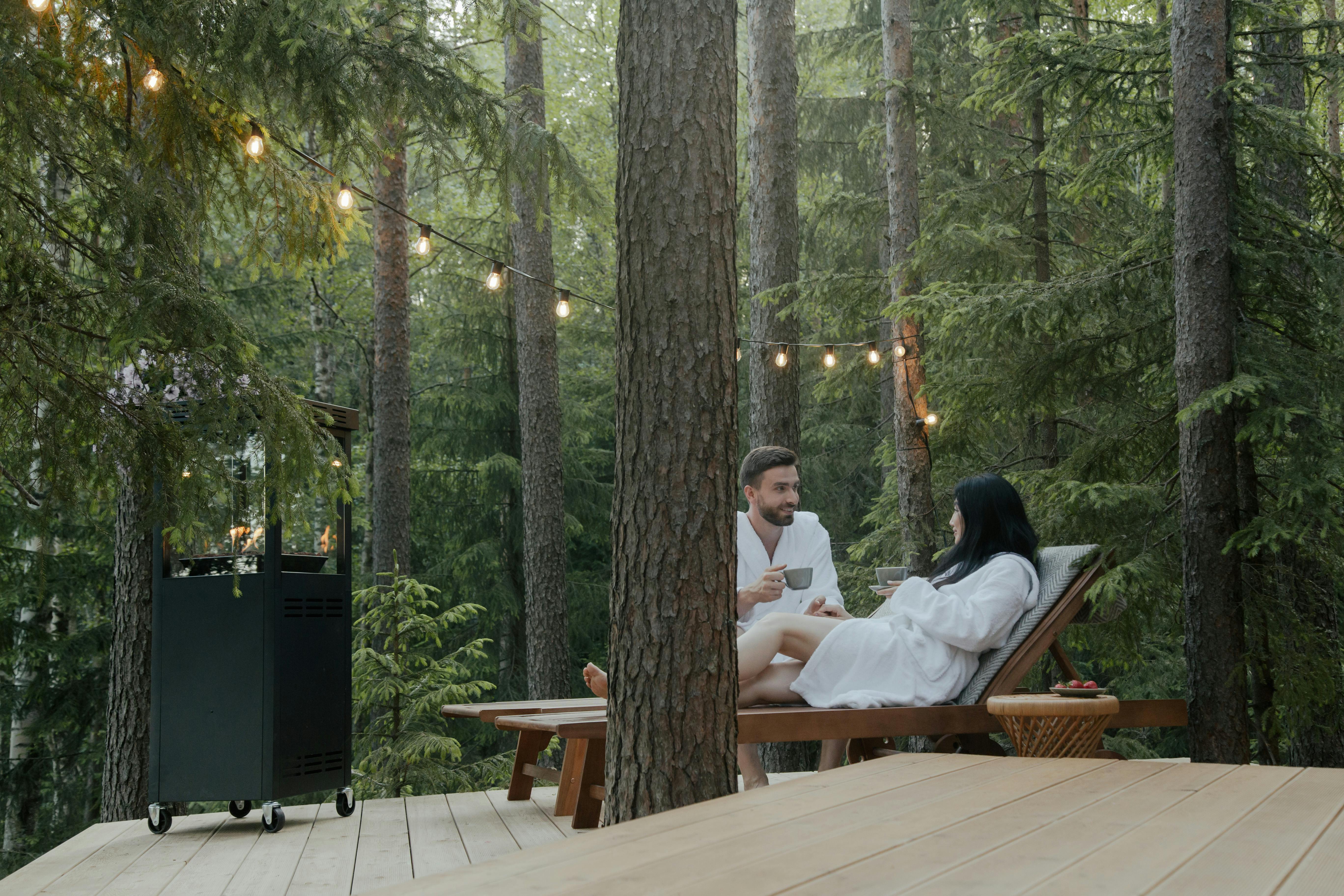
Long before wellness weekends filled social feeds, people understood the value of sitting outside with nowhere urgent to be. Porch culture was built around simple rituals: morning tea, a cool drink in the afternoon, casual conversation and watching the light change. The setting encouraged people to pause without needing to label the pause as productive.
You can borrow that rhythm even if your accommodation doesn’t have a traditional verandah. A balcony, garden chair or shaded patch near an open window will do. Pick one comfortable place and return to it at roughly the same time each day. Leave your phone inside for 20 minutes and take a book, sketchpad or cup of tea if sitting empty-handed feels strange.
This type of rest can be especially useful when holidays stir up old family habits or expectations. Guidance about old holiday patterns suggests grounding yourself in the present instead of automatically repeating familiar responses. A quiet outdoor ritual gives you a practical place to do that.
Keep the setup easy. You don’t need coordinated cushions, a styled picnic or an elaborate morning routine. Choose a seat with shade, bring water and notice five concrete things around you, such as birdsong, moving leaves or the temperature of the air. The modest nature of the ritual is part of its charm.
If you’re travelling with your partner, spend some porch time together without discussing the next activity. Comfortable silence can reset the mood after a long drive or a busy day, while unforced conversation often appears once nobody is trying to fill the moment.
Letting Go of Rigid Itineraries
A loose itinerary still has boundaries. You need to know checkout times, transport arrangements and any cancellation conditions. The difference lies in leaving enough space around those obligations for the day to breathe. Choosing comfortable accommodation and leaving room for spontaneity can make a more relaxed travel experience possible without filling every hour with planned activities.
Start with one anchor activity per day. It could be lunch at a restaurant you’ve wanted to try, a morning walk or a late-afternoon treatment. Keep the hours around it open. If lunch is booked for 1 pm, resist squeezing in two attractions beforehand and a timed tour immediately afterwards.
Use windows instead of precise times for informal plans. “Walk after breakfast” feels more relaxed than “depart at 8.35 am”, particularly when no booking depends on your arrival. You can also agree on a daily decision point. At 10 am, for example, check the weather and each person’s energy before deciding what comes next.
Give everyone permission to opt out. Holidays can bring different sleep patterns, social needs and energy levels into sharp focus. A quiet hour alone may prevent irritation from building into an argument.
It also helps to have an exit plan for activities and social commitments. Useful holiday exit strategies include setting a departure time and arranging independent transport where practical. For a couple’s getaway, the equivalent may be agreeing that either person can suggest heading back without having to defend the choice.
Try leaving the final day mostly empty. Packing, checking out and travelling home already demand attention. A slow breakfast and one local stop will usually feel better than a frantic attempt to squeeze value from every remaining minute.
The Power of Heat and Cold Therapy
Heat and cold can create clear transitions during an unstructured break. A sauna session might mark the end of an active afternoon, while a brief cold plunge can provide a focused sensory experience before you dry off and rest. The ritual has a beginning and an end, yet it doesn’t require a group timetable or an entire day’s commitment.
Treat both practices as optional and start conservatively. Sauna beginners can choose a short session, step out as soon as they feel uncomfortable and allow time to cool down. Drink water before and after, avoid heat when dehydrated or unwell, and never treat endurance as the goal.
Cold immersion also calls for care. Enter gradually, keep the first exposure brief and get out if you experience pain, dizziness, numbness or difficulty controlling your breathing. Don’t use a cold plunge alone if you’re uncertain how your body will respond. Pregnant people, or those with cardiovascular, blood pressure, circulation, or other relevant medical concerns, should seek individual advice from a qualified health professional before trying strong heat or cold exposure.
The most restorative part may come after the temperature change. Allow 15 to 30 minutes to shower, dress comfortably and sit somewhere quiet. Avoid racing straight into the car or opening your work email. That buffer turns a physical experience into a genuine pause.
There’s no need to build an elaborate wellness schedule around these facilities. One considered session can be enough, particularly if the rest of the day includes fresh air, regular meals and proper sleep. Pay attention to how you feel later that evening and the following morning before deciding to repeat it.
A good escape leaves room for adjustment. If rain arrives, you can read. If you wake up tired, breakfast can take an extra hour. When the only firm plan is an afternoon sauna followed by time on the verandah, changing course no longer feels like the holiday has gone wrong.
The true luxury is returning home without needing another break to recover from your break. Leave one afternoon blank, choose a comfortable outdoor seat and let the day take its own shape.